Clear alternatives
Compare implants with other restorative options and discuss the risks relevant to you.

Treatments
Explore dental implants in Mexico City: assessment, alternatives, surgery, restoration and follow-up. Arrange a consultation at Gloss Dent.
Your assessment
Dental implants are placed in bone to support restorations such as crowns, bridges or dentures. Suitability depends on health, local tissues and the goals of rehabilitation.
Surgery, healing and restoration are separate stages. Preliminary care and a temporary option may be needed. Timing follows diagnosis and clinical progress.
It depends on your case
In studies, implants, bridges and removable dentures have more similar lifespans than people tend to think. What tips the decision is whether the neighboring teeth are healthy, how much bone there is (seen on a CT scan), the health of your gums, whether you smoke, certain medications and the maintenance you can keep up. At 10 years, 96% of implants were still in place in one systematic review; they are not forever, and they are not maintenance-free.
| If your assessment shows… | Usually considered… |
|---|---|
| Healthy neighboring teeth | An implant: it avoids grinding them down for a bridge. |
| Neighboring teeth that already have or need crowns | A bridge can make sense because it makes use of those crowns; at 10 years, about 89% were still in place. |
| Enough bone on the CT scan | A conventional implant. |
| Little bone in the upper back of the mouth (below the sinus) | A sinus lift with a graft, or a short implant. At one year there was no clear difference in failures, but the sinus lift had more complications. |
| A tooth that was just extracted or is about to be | An implant the same day, after some weeks or after some months: all have good results, but immediate placement was associated with somewhat more failures and, in the visible front area with thin bone, with a higher risk of the gum receding. It is decided with the CT scan. |
| You want a temporary tooth the same day | It depends on how firm the implant is once placed and on bone quality, and it is decided during surgery. Cochrane saw no clear difference in the first year, with very weak evidence, and observational studies associate it with more failures. |
| Periodontitis, now or in the past | Treat it first, then keep up maintenance: a history of periodontitis multiplied the risk of peri-implantitis by 4. |
| You smoke | Quit or cut back before and after surgery: in smokers, 6.35% of implants failed, versus 3.18% in nonsmokers. |
| Diabetes | Get your blood sugar under control first; with diabetes, failure rates were no different in one review, although there was somewhat more bone loss. |
| Bone medications (bisphosphonates, denosumab) | Always mention them: at low doses for osteoporosis there were no more failures; at high doses for cancer, implants are contraindicated. |
| Several missing teeth and surgery is not an option | A removable partial denture: 95% were still in use at 5 years, although the teeth that support it are twice as likely to be lost. |
General criteria from the clinical literature (sources below). They do not replace an assessment: your plan comes from the diagnosis of your own case.
Is it right for me?
What to discuss
Compare implants with other restorative options and discuss the risks relevant to you.
Confirm which components, procedures and review visits are included.
Cleaning and follow-up continue after restoration. Implants can develop complications and need further care.
The process
Medical history (medications, diabetes, smoking), a gum exam and a CT scan of the site. An implant is not planned without a CT scan.
An implant, a bridge, a removable denture or not replacing the tooth, with the risks and benefits of each.
Treating gums and cavities; getting smoking and blood sugar under control.
The timing of the implant is decided; if bone is lacking, it is grafted beforehand or at the same time.
With good stability, in some cases you leave with a temporary tooth.
The implant fuses with the bone before the final crown.
It is placed and the bite is adjusted.
For comparison in the future. Regular checkups matter because peri-implantitis can start without pain.
Common questions
In a review of studies at 10 years, 96.4% of implants were still in place (93.2% if you count the patients who stopped coming in). The crown on top: 89.4% at 10 years. These are averages, not a guarantee: the outcome depends on bone, gums, smoking and maintenance.
It is inflammation around the implant with bone loss. In one review, on average 22% of people with implants had it, and 43% had a milder inflammation (mucositis). That is why regular checkups are part of the treatment.
Sometimes. It depends on how firm the implant is when it is placed and on the quality of the bone; it is decided during surgery. The evidence that it gives the same result as waiting is weak.
It depends on what the CT scan shows. Sometimes it can be avoided with a short or angled implant; other times, the graft is the best option. It is a balance of risks that is explained in your plan.
If the tooth can be restored well, a well-done root canal has survival comparable to an implant's, and you keep your own tooth. If it cannot be restored, extracting it and placing an implant is reasonable.
The plan with alternatives, the informed consent with the risks, who does the surgery and who does the crown, and the brand and model of the implant.
The criteria and figures on this page come from these sources. They are averages from studies, not a promise for any individual case.
Discuss your dental health, goals and treatment options in Mexico City. Local and international patients are welcome.
Read our articles about veneers, implants, aligners and preparing for your visit.
Explore Gloss Dent guidesExplore treatments
 01
Explore a plan for shape, color and proportion, guided by an assessment.
View treatment 02
Compare composite and ceramic options, preparation and ongoing care.
View treatment 03
Clear, removable aligners with an individual plan and professional reviews.
View treatment 04
Discuss alignment, bite and a timetable based on your diagnosis.
View treatment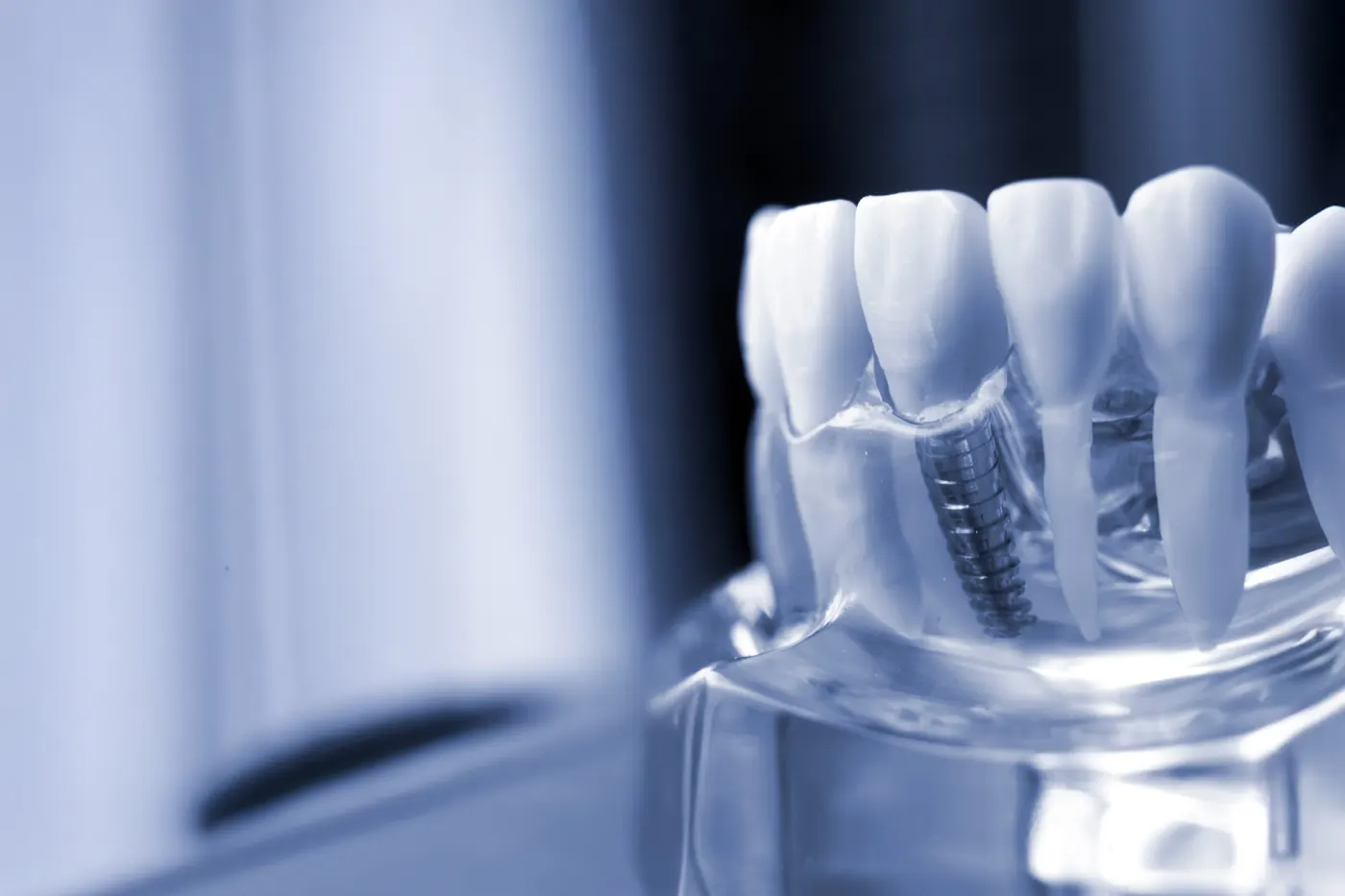 05
Review implant-supported restorations, treatment stages and maintenance.
You are here 06
An assessment of root canal treatment to help retain a tooth.
View treatment 07
Explore full-arch implant care, prosthesis options and follow-up.
View treatment